
 begüm
begüm Visiting the ancient city of Ephesus felt like stepping into a time machine; every stone seemed to hold its own story! Standing in front of the Library of Celsus and closing my eyes, I felt as if I could hear the sounds of that era. If you enjoy walking through streets full of history and tracing the past, Ephesus is perfect for you! In this article, you can find all the information about Ephesus Ancient City for 2026, including entrance fees, visiting hours, and concert details. Let’s get started!
Where is Ephesus Ancient City?
Ephesus Ancient City is located in the west of Turkey, within the Selçuk district of İzmir province. About 3 km from the town centre, this ancient city welcomes thousands of visitors each year with its historical and cultural treasures. Ephesus is approximately 80 km from İzmir, making it easily accessible. If you ever travel to the Aegean Region, you should definitely visit Ephesus Ancient City. From Istanbul to Ephesus: around 541 km, approximately 6 hours and 20 minutes.
How to Get to the Ancient City of Ephesus?
By Plane: You can reach İzmir Adnan Menderes Airport by plane. For affordable flight tickets, CLICK HERE! To get to Ephesus, you can travel from İzmir Airport to the Selçuk district by public transport, taxi, or car hire in about 1 hour.
By Car: One of the most comfortable ways to travel to Ephesus is by renting a car or arranging a private transfer. For affordable car hire, CLICK HERE!
Ephesus Ancient City Map
Ephesus Ancient City Entrance Fees 2026


Opening Hours: 08:00 – 18:00
Ephesus Ancient City Entrance Fee: €40 (free with Museum Card)
Ephesus Terrace Houses Entrance Fee: €10 (Museum Card not valid)
Ephesus Experience Museum Entrance Fee: 200 TL (Museum Card discount, €15 for foreign visitors)
Parking Fee: 70 TL
Museum Card is valid for Turkish citizens.
When to Visit?
You can visit Ephesus in any season, but in my opinion, one of the most enjoyable times is spring. Since it is an open-air site, summer and winter can sometimes be challenging. Of course, many people visit in summer, but exploring Ephesus in the hot İzmir climate can be difficult. If you plan to come in summer, the early morning is the best option. The weather will be cooler, and you can explore comfortably without the crowds.
Ephesus Ancient City Visiting Hours
There is a fairly flexible visiting period for Ephesus Ancient City. In the summer season (1 April – 1 October), you can enter the ancient city at 08:00 and stay until 19:00. In the winter season (1 October – 1 April), opening starts slightly later at 08:30, and the site closes at 18:00. Ephesus is open every day, but there is one exception: on the first day of religious holidays, it may be closed until noon. So it’s useful to plan your visit accordingly.
Ephesus Experience Museum
The Ephesus Experience Museum, located within Ephesus Ancient City, offers an interactive insight into the region’s history. Visitors can gain a deeper understanding of Ephesus’ past through various exhibitions, digital and audio guides, and an impressive tour experience. The museum provides visuals, 3D models, and reconstructions, allowing visitors to travel through time. Entrance fee: 200 TL (Museum Card discount available, €15 for foreign visitors). For tours and detailed information, CLICK HERE!
Concerts and Events in Ephesus
Ephesus Ancient City is not only a place to explore history but also a centre for cultural events. Summer concerts and open-air events take place in the breathtaking setting of the ancient theatre. If you want to experience history and music together, you can plan your visit by following Ephesus’ concert schedule. You can also look here.
Must-See Places in the Ancient City of Ephesus
- 1Harbor Street
- 2Ephesus Ancient Theater (Great Theater)
- 3Commercial Agora
- 4Library of Celsus
- 5Temple of Serapis
- 6Marble Street
- 7Mazeus Gate and Mithridates
- 8House of Love
- 9Hillside Houses
- 10Temple of Hadrian
- 11Trajan’s Fountain
- 12Curetta Street
- 13Temple of Domitian
- 14City Hall (Prytaneion)
- 15Odeon
- 16House of the Virgin Mary
- 17Temple of Artemis
- 18Church of the Virgin Mary
- 19Seven Sleepers
- 20Basilica of St. Jean
Port Street

Arcadiane Street, also known as Harbour Street, is the longest and most magnificent street in Ephesus Ancient City. Approximately 600 metres long, this street served as the main route connecting the harbour to the city.
Ephesus Ancient Theatre (Grand Theatre)

This theatre is the largest open-air theatre of the ancient world and can hold up to 24,000 spectators. Although its stage has not survived to the present day, the seating areas are very well preserved. Additionally, it holds great significance in Christian history, as it is the place where St. Paul preached.
Commercial Agora

Located right next to the Library of Celsus, the Agora was Ephesus’ most important trade and cultural centre. It was also used as a marketplace. With entrances through three different gates, it was built in the 3rd century BC during the reign of Emperor Augustus. However, a major earthquake in the 4th century AD severely damaged the Agora, rendering it unusable afterwards.
Library of Celsus

Perhaps the most striking structure in Ephesus is definitely the Library of Celsus. Built by the son of Celsus, the governor of Ephesus who died in 106 AD, this library appears two-storeyed from the outside, but inside it is single-storeyed with a high ceiling. Truly an impressive structure!
However, there is an interesting and rather amusing claim about this library. It is said that there was a brothel located right opposite the library. While similar situations existed in other ancient cities, what makes this case notable are the rumours of a secret passage from the library to the brothel. According to these stories, people of that time allegedly used this passage secretly to visit the brothel.
Temple of Serapis

Located right behind the Library of Celsus, the Temple of Serapis is one of the most interesting structures in Ephesus. Believed to have been built between 138 and 192 AD, this temple was dedicated to the Egyptian god Serapis. Made of Egyptian granite, it served followers of the Serapis cult. Interestingly, during the Christian period, the temple was converted into a church. However, inscriptions found during excavations reveal that the temple was originally dedicated to Serapis. It is a place of great historical and religious significance.
Marble Street
Marble Street, stretching from Library Square to the theatre, is one of Ephesus’ main roads. It was designed to allow vehicle passage and features sidewalks on both sides for pedestrians.
Mazeus Gate and Mithridates

Mazeus Gate, one of the important structures in Ephesus, is also known as the South Gate of the Agora. It provided access from the Library of Celsus to the Commercial Agora. Believed to have been built in the 4th–3rd century BC, the gate was interestingly financed and constructed by two freed slaves, Mazeus and Mithridates, under the reign of Emperor Augustus. Truly a historically fascinating structure!
House of Love
Located at the intersection of Curetes Street and Marble Street, the House of Love is one of Ephesus’ notable structures. Known as a brothel of its time, it had underground connections to many buildings through secret passages. Although these passages have not yet been uncovered, it is believed that married men of Ephesus frequently used this place. Additionally, the footprint at the entrance, seen in photographs, may belong to a sex worker who worked there, functioning like an advertising sign of the period.
Terrace Houses
The Terrace Houses were built as the residences of Ephesus’ wealthy citizens. Covering an area of 4,000 m², each house has its own courtyard. Considering the luxury of the time, these houses were reportedly heated with an underfloor system. They were used until the city was abandoned and are still open to visitors today, remaining well-preserved. Entrance fee: 320 TL (Museum Card not valid) within Ephesus Ancient City.
Temple of Hadrian
The Temple of Hadrian was built in honour of Roman Emperor Hadrian. Constructed in 128 AD to commemorate Hadrian’s visit to Ephesus, it features reliefs of the goddess of fortune, Tyche, and Medusa, which are now displayed in the Ephesus Museum. In the past, the pedestals in front of the temple held bronze statues of four Roman emperors: Galerius, Maximian, Diocletian, and Constantine.
Fountain of Trajan
The Fountain of Trajan was built between 102–114 AD in honour of Emperor Trajan and Artemis of Ephesus. Originally two-storeyed, it was later restored as a single-storey structure. Some of the fountain’s statues are now in the Ephesus Museum, while others are displayed at the British Museum.
Curetes Street
One of the main streets in Ephesus, Curetes Street, stretches from Heracles Gate to the Library of Celsus. Along this street, you can explore impressive structures such as the Fountain of Trajan, Temple of Hadrian, and Scholastica Baths. Curetes Street is named after the mythological demigods, the Curetes.
Temple of Domitian
The Temple of Domitian was built between 81–96 AD in honour of Emperor Domitian. After his death, due to his tyranny, the Roman Senate ordered his name to be erased from all inscriptions. Instead of demolishing the temple, the Ephesians cut off the head of Domitian’s statue and replaced it with the head of his father, Vespasian, a notable act of public protest.
Prytaneion

The Prytaneion, or Town Hall, was built in the 1st century AD during the reign of Emperor Augustus. This building served as the place where city officials discussed civic matters and managed diplomatic relations. It consists of three courtyards, with the last containing a banquet hall. The office of the city’s highest-ranking official was also located here, making it a very important centre. The Prytaneion functioned as a hub for both administrative affairs and social events.
Odeon
Another feature of Roman cities is the odeon. Unlike amphitheatres, odeons were smaller, designed for small groups to gather and discuss important matters rather than for large public shows. These venues typically functioned as spaces where council members made decisions about the city’s future. The Odeon in Ephesus, dating back to 100 AD, played a significant role in the city’s social and political life, serving not just for relaxation or entertainment but also as the heart of city governance.
Places to Visit Outside Ephesus Ancient City
House of the Virgin Mary
Anna Katharina Emmerick, once living in a village in Germany, had never left her hometown. However, after falling seriously ill, she began to provide detailed information about places and people she had never seen. Recognising the significance of her visions, the writer Clemens Brentano moved in with her and stayed until her death. Based on her accounts, he wrote a book about the life of Mary. In 1891, while a group in İzmir French Hospital read the book, many doubted its accuracy. On 29 July 1891, a church matching the book’s description was discovered, and from then on, many began to believe in the truth of Anna Katharina’s visions.
Church of Mary
The Third Ecumenical Council, one of the most important gatherings in Christian history, was held in this church in 431 AD. The council confirmed that Mary gave birth to Jesus not only as a human but also as God. The Church of Mary remained significant until the 7th century AD. Its importance declined after the construction of St. John Basilica and the relocation of the bishopric.
Temple of Artemis
The Temple of Artemis was one of the Seven Wonders of the World. Sidonian Antipater described it beautifully: “I saw the massive walls of Babylon, the statue of Zeus, the Hanging Gardens, the giant statue of the Sun, the pyramids, and Mausolus’ tomb, but when I saw the Temple of Artemis, all other wonders seemed faded. It was so impressive that I thought, ‘Even the Sun outside Olympus has never seen anything like this.’” Sadly, the temple was destroyed over time, but visiting Ephesus allows you to imagine its grandeur clearly.
Seven Sleepers
The legend of the Seven Sleepers, told in many cultures, involves seven people seeking refuge from persecution in a cave and falling asleep there. In Ephesus, the ruler closed the cave entrance, leaving them to die. 200 years later, the cave was reopened, and the sleepers were found alive. Some went to the village for food, revealing the miracle. This cave is said to exist in 4 locations in Turkey and 33 worldwide.
St. John Basilica
St. John, one of Jesus’ twelve apostles, is also known as John the Evangelist, and the St. John Basilica is believed to house his tomb. According to tradition, he wrote the Gospel of John here. A basilica was later built over his tomb, taking the place of the Church of Mary in Ephesus and gaining great significance. After Jerusalem, it became one of the most important Christian pilgrimage sites. In 2015, it was included in the UNESCO World Heritage List, and since then it has been preserved and opened to visitors along with Ephesus.
Frequently Asked Questions About the Ancient City of Ephesus
How much is the entrance fee for Virgin Mary?
The entrance fee to the House of Virgin Mary will be 100 TL as of 2026.
How Long Does It Take to Visit the Ancient City of Ephesus?
It’s a good idea to allocate 2-3 hours to exploring the ancient city of Ephesus. While it might seem a bit excessive at first, considering the unique experience of wandering around an ancient city, this time shouldn’t be too long. If you opt for a guided tour, it typically lasts around 2 hours. However, if you’re looking to explore more of Ephesus and also explore other important sites in the area, such as the House of the Virgin Mary and the Temple of Artemis, the tour can last up to 4-5 hours. By planning your time wisely, you can fully enjoy each historical site.
How much does a museum card cost?
As of 2026, the Museum Card will cost 100 TL for citizens of the Republic of Türkiye.
What time do the lights of Ephesus turn on?
Yes, the lights of the Ancient City of Ephesus usually come on around 20:00 in the evening.
Can I enter Ephesus with a museum card?
Yes, Museum Card holders can visit the ancient city of Ephesus twice a year, free of charge. If you don’t have a Museum Card yet, don’t worry! There’s a Museum Card sales point in Ephesus where you can purchase one now. Buying a Museum Card is a much more economical option than buying a ticket.
History of Ephesus Ancient City
Founded around 6000 BC, Ephesus hosted numerous civilizations, from the Hellenistic period to the Romans, Byzantines (Eastern Romans), Anatolian Beyliks, and the Ottomans. This magnificent city left its mark on history not only for its advanced urban planning but also as a trading hub as a port city, a mosaic embracing thousands of years of culture, and a Christian pilgrimage centre.
According to legend, Ephesus was first founded by the warrior Amazon women and took its name from the city of Apasas (City of the Great Goddess). The city later grew under the leadership of Androklos, a prince of Athens. Established based on prophecies, Ephesus reached its golden age in 129 BC when the King of Pergamon left the region to the Romans, becoming one of Asia’s most important trade centres.
Ephesus also holds a special place in Christian history, as Saint Paul, Saint John, and the Virgin Mary lived in this region, making it a religious centre. The city frequently changed hands; it came under Turkish control in 1304, experienced a brief period of prosperity, but was severely damaged by Mongol invasions. Ephesus became part of the Ottoman Empire in 1425 and gradually lost importance, receding from the coast to its current location. Ephesus is not just a city—it is history itself.
Places to Visit Near Ephesus Ancient City
Places to Visit in İzmir
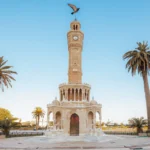
If you want to continue exploring after visiting Ephesus Ancient City, I have a great suggestion! İzmir and its surroundings are rich in attractions, ranging from historic bazaars to coastal towns. You can explore many different options. For a detailed guide on what to see in İzmir, check out my blog post: Places to Visit in İzmir.
Şirince, İzmir Turkey

Şirince is a charming village in the Selçuk district of İzmir, famous for its historic and authentic atmosphere. It is located approximately 8 km from Ephesus Ancient City, about 15 minutes by car. With its narrow stone streets, boutique wines, and delicious local products, it offers a perfect peaceful getaway. It’s an excellent stop for enjoying a fresh village breakfast and shopping for souvenirs. If you visit Şirince, make sure to see its historic churches as well. Check out the Şirince Village travel guide!
We’ve reached the end of this article. See you in the next one.
Follow me on Instagram!
https://www.instagram.com/begumaaktas