 begüm
begüm Located in the heart of Istanbul, Hagia Sophia Museums has served as a significant cultural and religious center during both the Byzantine and Ottoman periods. Initially constructed in 537 AD by Emperor Justinian I, this magnificent structure functioned as a church for centuries before being converted into a mosque following the Ottoman conquest of 1453. Today, it is open for worship as Ayasofya Mosque.
In this section, you will find detailed information about Hagia Sophia’s history, architecture, entrance fees, visitor experience, and its transformation into a mosque. Important insights regarding the Ayasofya History and Experience Museum are also included.
History and Construction of Hagia Sophia
In what year was Hagia Sophia built?
Hagia Sophia was commissioned by Byzantine Emperor Justinian I in 537. When construction began in the Byzantine capital of Constantinople, it was designed as the largest church in the world and was completed quickly. Its dome is considered one of the largest and most innovative structural elements of its time.
Who built Hagia Sophia?
The best engineers and architects of the time worked on the construction of Hagia Sophia. The dome architecture, in particular, was a major revolution in the 6th century and is considered an extraordinary engineering achievement. The mosaics inside contain important examples of Christian iconography.
How old is Hagia Sophia?
Hagia Sophia has a history of approximately 1,488 years (as of 2026). It was converted into a mosque by the Ottomans in 1453, opened as a museum in 1935, and resumed use as a mosque in 2020. For centuries, it has been one of Istanbul’s most important symbols, serving as both a religious and cultural center.
Information About the Hagia Sophia Mosque

When did Hagia Sophia become a mosque?
Hagia Sophia began serving as a mosque after the Ottoman conquest of Istanbul in 1453.
During the Ottoman period, Hagia Sophia served as a mosque, and during this period, a pulpit, mihrab, and minarets were added.
In 1935, during the Republican era, it opened as a museum, exhibiting both Christian mosaics and Islamic calligraphy.
In 2020, by decree of the Republic of Turkey, it was reopened as a mosque. Today, it serves both as a mosque and as a cultural site open to visitors for tourism.
Where and in which city is the Hagia Sophia Mosque?
The Hagia Sophia Mosque is located in Sultanahmet Square, one of Istanbul’s most central and historic districts. This historic structure is very close to important landmarks such as the Blue Mosque and Topkapı Palace. Located in the heart of Istanbul’s historic peninsula, the Hagia Sophia area offers an easily accessible location for those exploring the city.
How to Get to Hagia Sophia?
Marmaray: If you’re coming from the Asian side, you can take Marmaray to Sirkeci Station and from there, it’s a short walk to Hagia Sophia. Tram: The T1 Tram line to Sultanahmet ends at a stop very close to Hagia Sophia. After getting off at the Sultanahmet stop, you can reach Hagia Sophia in about a 5-minute walk. Bus: Several bus lines serve the Sultanahmet area. You can easily reach Sultanahmet Square using buses from Taksim Square.
Features of Hagia Sophia
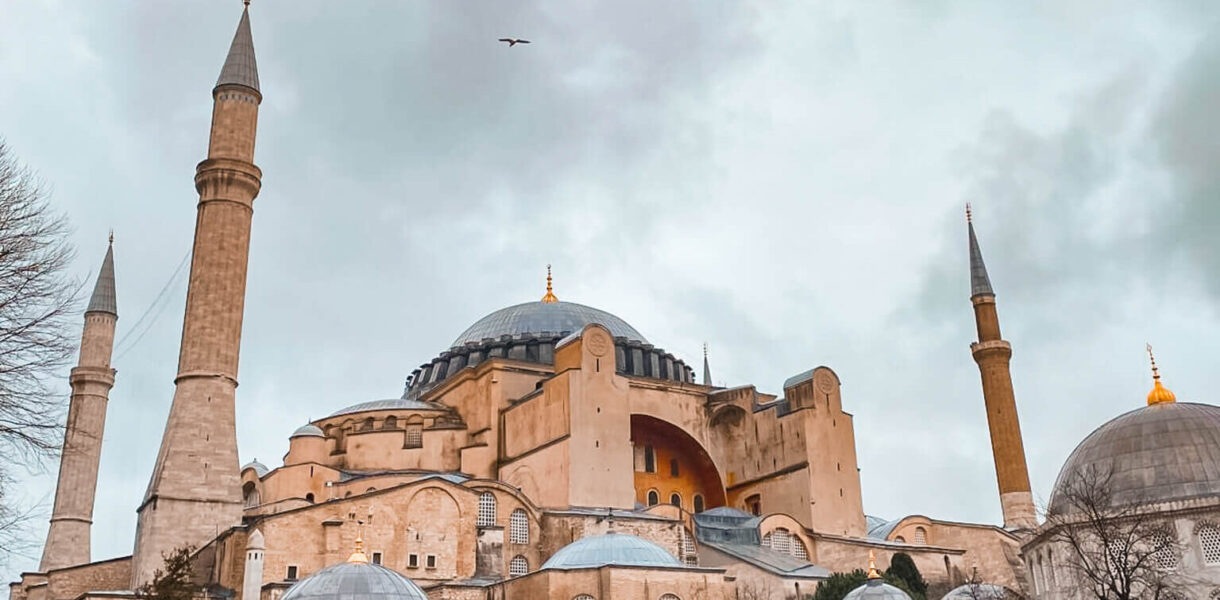
Hagia Sophia is a truly unique structure in terms of architecture. Built in 537 by Byzantine Emperor Justinian I, this massive structure is considered one of the pinnacles of Byzantine architecture. Hagia Sophia’s most striking feature is its large and impressive dome. At the time of its construction, the dome was considered the largest dome in the world and adds a unique depth to the building’s interior. Furthermore, the 107 colossal columns within Hagia Sophia are among the elements that enhance its solidity and grandeur.
As an example of Byzantine architecture, Hagia Sophia’s interior is vast and open, filled with a play of light. When it was converted into a mosque during the Ottoman period, striking calligraphy and pulpits were added to the interior, adding a unique dimension to the structure. This architectural structure, a fusion of both Byzantine and Ottoman art, has remained a treasure trove of both religious and artistic treasures throughout history.
When was Hagia Sophia built?
Hagia Sophia, in addition to being one of Istanbul’s most important symbols, has a rich history bearing the traces of diverse civilizations. Originally built in 537 by the Byzantine Emperor Justinian I, it was built in 537.
Hagia Sophia Museum and Visiting Experience
Hagia Sophia Museum and Visiting Experience
As of 2024, entrance to the Hagia Sophia will be free for Turkish citizens visiting for worship. Visitors will be able to see the Ottoman-era additions and the gates of heaven and hell within the mosque. They will also be able to explore the Byzantine mosaics in this section, exploring the history of the area.
What is the entrance fee to the Hagia Sophia Museum?
Tourists visiting the gallery floor can enter by purchasing a ticket from the visitor entrance. The entrance fee is €25 per person. This fee applies to visitors wishing to tour the upper floor. Click here for your Hagia Sophia entrance ticket!
Is the card valid in the Hagia Sophia Museum?
Museum Card is not valid in Hagia Sophia Museum.
Hagia Sophia History and Experience Museum
The Hagia Sophia History and Experience Museum aims to present Hagia Sophia and its history to visitors through an interactive experience. This museum provides information about Hagia Sophia’s journey from its construction during the Byzantine Empire to the Ottoman period, including its architecture, mosaics, and religious significance. Digital presentations and simulations allow you to witness Hagia Sophia’s past more closely and discover details about life during that period. The 2026 Hagia Sophia History and Experience Museum entrance fee is 425 TL for Turkish citizens and 25 Euros for citizens of other countries. Museum cards are not valid. If you don’t want to wait in line for tickets, click here for an audio guide!
This concludes our article on Hagia Sophia Mosque and Hagia Sophia Museum Entrance Fees. See you in the next article.
Click for the Basilica Cistern Travel Guide!
Follow me on Instagram!
https://www.instagram.com/begumaaktas