 begüm
begüm Istanbul is a city where every corner holds a trace of the past and every street has a story to tell. With its historical texture, cultural richness, and unique atmosphere, visiting the city feels like going on a journey through time. Iconic landmarks such as Hagia Sophia, Topkapı Palace, Galata Tower, and the Basilica Cistern make exploring Istanbul incredibly enjoyable.
But Istanbul is not just about the well-known tourist spots; hidden gems like Beylerbeyi Palace, Pierre Loti Hill, and Yoros Castle offer a completely different experience. If you’re wondering, “What are the historic places in Istanbul?”, let’s get lost together in the enchanting streets of this magical city!
When to Visit Istanbul?
In my opinion, Istanbul is beautiful in every season, but if you want to plan a comfortable trip, my answer to the question “When is the best time to visit Istanbul?” would definitely be autumn. After the stifling heat of summer passes, the cooler weather makes exploring the city much more enjoyable. Additionally, since the holiday season is over, the summer crowds disperse, giving you a chance to visit Istanbul’s historic sites more peacefully.
So, what would I say is the least suitable time to visit Istanbul? Definitely summer! During this period, the number of tourists increases significantly, and in popular places like Sultanahmet, Hagia Sophia, and the Grand Bazaar, it can even be difficult to find space to walk.
List of Historical Places to Visit in Istanbul
- 1Topkapı Palace
- 2Dolmabahçe Palace
- 3Beylerbeyi Palace
- 4Adile Sultan Palace
- 5Abdulmecit Efendi Mansion
- 6Pera Palace Hotel
- 7Yedikule Dungeons
- 8Basilica Cistern
- 9Şerifiye Cistern
- 10Binbirdirek Cistern
- 11Ortaköy Mosque
- 12Galata Tower
- 13Sultanahmet Mosque
- 14Historical Sultanahmet Meatball Restaurant
- 15Hagia Sophia Mosque
- 16Panorama 1453 Museum
- 17Spice Bazaar
- 18Rahmi Koç Museum
- 19Eyüp Sultan Mosque
- 20Pierre Loti Hill
- 21Yoros Castle
- 22French Orphanage
Click to download the Map of Historical Places to Visit in Istanbul!
Istanbul Historical Places
Topkapı Palace

Topkapı Palace, located in Istanbul’s Historic Peninsula, is one of the city’s most important historical and touristic sites. This grand palace, which served as both the administrative centre and the residence of the sultans of the Ottoman Empire for nearly 400 years, was built by Sultan Mehmed II (Fatih Sultan Mehmet) between 1460 and 1478. Its location, overlooking the Bosphorus and the Golden Horn, adds to its impressive presence.
Inside the palace, there are four large courtyards, the Treasury, and the Sacred Relics sections. Areas displaying the sultans’ personal belongings and the Harem are particularly popular among visitors. Topkapı Palace is closed on Tuesdays, and visiting hours are 09:00–18:00 in summer and 09:00–17:00 in winter. Please note that the last entry is one hour before closing.
Entrance to the palace is paid, but Museum Pass holders can visit the main sections for free. Some special areas, such as the Harem, require an additional fee. Since prices may change, it is recommended to check the latest information before visiting. To avoid queues and for an audio guide, CLICK HERE!
Dolmabahçe Palace

Dolmabahçe Palace, located on the shore of the Bosphorus in Istanbul, is a significant Ottoman palace known for its magnificent architecture. Built in the 19th century, this grand building gained importance when the administrative centre of the Ottoman Empire moved from Topkapı Palace to here. Constructed by Sultan Abdülmecid between 1843 and 1856, the palace combines Western architectural styles with Ottoman traditions, creating a dazzling atmosphere with its large crystal chandeliers and gold-plated details.
One of the palace’s most notable points is the room where Mustafa Kemal Atatürk passed away in 1938, allowing visitors to witness a significant moment in history. Dolmabahçe Palace is closed on Mondays and Thursdays, and visiting hours are 09:00–18:00 in summer and 09:00–16:00 in winter. Please note that the last entry is allowed one hour before closing.
There is a general entrance fee for the palace, but special sections such as the Harem and Selamlık require separate tickets. The Museum Pass is valid here. After your visit, I highly recommend exploring the Painting Museum as well. To avoid queues and for an audio guide, CLICK HERE!
Beylerbeyi Palace

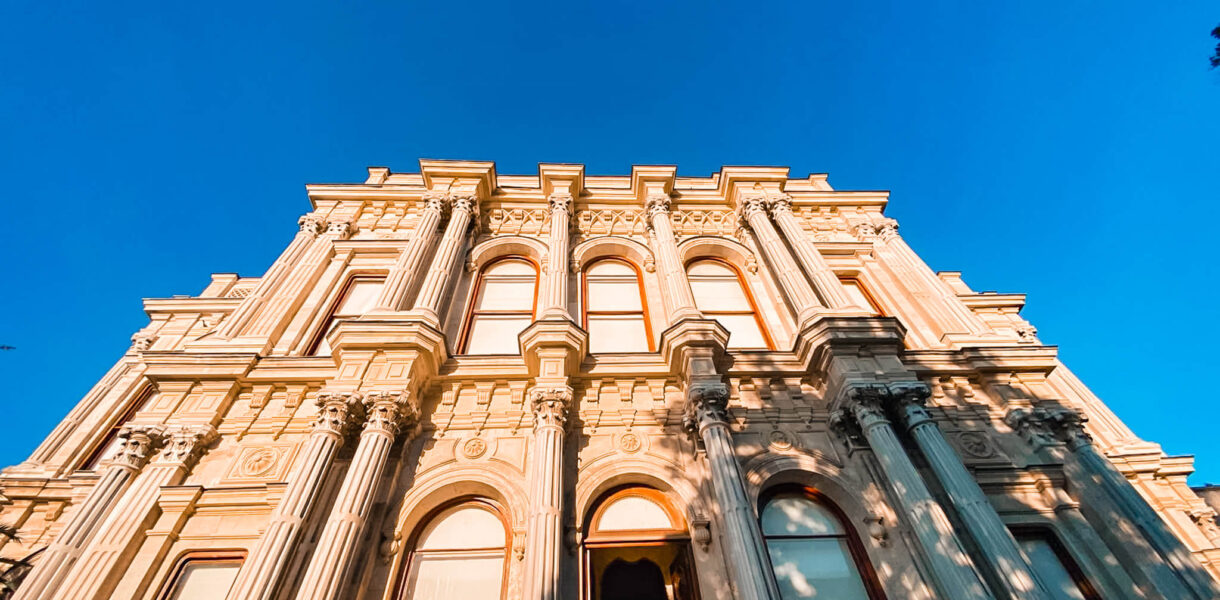
Beylerbeyi Palace, located on the Asian side of the Bosphorus in Üsküdar, is an elegant Ottoman palace. Built between 1860 and 1865 by Sultan Abdülaziz, this impressive structure was used as a summer residence and to host foreign dignitaries. The palace reflects elements of Baroque and classical Ottoman architecture, offering a simple yet stunning beauty.
Inside, visitors can admire crystal chandeliers, valuable carpets, and furniture imported from Europe, while the garden overlooking the Bosphorus provides a magical atmosphere. Notable features include the tunnels and pools that kept the palace cool during summer. As one of the important structures from the late Ottoman period, Beylerbeyi Palace is also known as a place where Sultan Abdülhamid II spent part of his exile.
The palace is closed on Mondays and Thursdays, and visiting hours are 09:00–18:00 in summer and 09:00–16:00 in winter. Entrance is paid, but the Museum Pass is valid. It is a must-see among Istanbul’s historic and touristic sites! To avoid queues and for an audio guide, CLICK HERE!
Abdulmecit Efendi Mansion


The Abdülmecit Efendi Mansion, located on the Asian side of Istanbul in Üsküdar, is a historic mansion that witnessed the final years of the Ottoman era. It was used in the late 19th century by Abdülmecit Efendi, the son of Sultan Abdülmecid, and stands out for its architecture and connection to the arts.
Abdülmecit Efendi was an Ottoman prince known for his interest in art and passion for painting, which is reflected in the mansion’s decor that resembles an art gallery. Today, it hosts exhibitions and cultural events at certain times. Since there is no fixed visiting schedule, it is recommended to check the event calendar in advance before planning a visit.
Pera Palace Hotel

The Pera Palace Hotel, located in Beyoğlu, is an iconic hotel that combines history and luxury. It was opened in 1892 to accommodate passengers of the Orient Express, and since then has become one of Istanbul’s historic and touristic landmarks.
One of the hotel’s most remarkable features is that Mustafa Kemal Atatürk stayed in Room 101 during his visits to Istanbul. Today, this room can be visited as the Atatürk Museum. Additionally, it is believed that the famous writer Agatha Christie wrote her novel Murder on the Orient Express here.
Yedikule Dungeons

The Yedikule Dungeons are among Istanbul’s oldest and most historic structures. They were built during the reign of Sultan Mehmed II (Fatih Sultan Mehmet) by adding towers around the famous Golden Gate of Byzantium. Serving both as a fortress and a prison, this site sheds light on the city’s deep past.
During the Ottoman period in particular, the Yedikule Dungeons housed important captives and prisoners, witnessing many tragic events and hosting several well-known figures. The historical atmosphere of the dungeons is truly striking — a place where you can feel the past in your bones.
Entry is free, but you need to make a reservation through the Fatih Municipality. With a 30-minute guided tour, you can descend into the depths of the dungeons, and I highly recommend experiencing this unique piece of history. Don’t forget to book online! For reservations, CLICK HERE.
Basilica Cistern


The Basilica Cistern, located in Istanbul’s Historic Peninsula, is one of the city’s most fascinating and mysterious landmarks. Built in the 6th century by Byzantine Emperor Justinian I, this enormous underground water reservoir was constructed to supply the city’s water needs. Hidden beneath the ground, its massive columns and dim lighting create a mystical atmosphere. The cistern is supported by 336 columns, some of which have striking details — especially the two columns featuring Medusa heads. The fact that these heads were placed sideways and upside down has inspired many legends over the years.
For visits in 2026, entrance fees are as follows:
09:00 – 18:30
- Turkish Citizens: 300 TL
- Foreign Visitors: 1,300 TL
- Students: 75 TL
19:30 – 22:00
- Turkish Citizens: 500 TL
- Foreign Visitors: 2,000 TL
- Students: 300 TL
Tickets can be purchased HERE. If you prefer not to wait in line and would like an audio guide, CLICK HERE.
Şerifiye Cistern

The Şerefiye Cistern, located in Istanbul’s Historic Peninsula, is one of the city’s oldest structures. Built in the 5th century during the reign of Byzantine Emperor Theodosius II, this water reservoir lies near Sultanahmet and was originally constructed to meet the city’s water needs. Smaller than the Basilica Cistern, its most interesting feature is that it remained hidden among other buildings for many years.
After restoration works, the Şerefiye Cistern was opened to visitors in 2018, and today it offers a visual feast with modern lighting and projection techniques.
The cistern is open daily between 09:00 and 19:00. Tickets can be purchased at the counters or via Passo. As of 2026, entrance fees are as follows:
- Foreign Visitors: ₺825.00
- Turkish Citizens: ₺220.00
- Students/Teachers: ₺82.50
For tickets, CLICK HERE.
Binbirdirek Cistern

The Binbirdirek Cistern, located in Istanbul’s Historic Peninsula, is one of the city’s largest and most impressive water reservoirs. It was built in the 6th century during the reign of Byzantine Emperor Justinian I. Its name comes from the 224 columns inside. Situated near Sultanahmet, the cistern was originally constructed to meet the city’s water needs and is thought to have been in use for about 1,500 years.
The Binbirdirek Cistern is usually open daily between 10:00 and 17:00. As of 2026, the entrance fee is 55 TL.
Ortaköy Mosque
Ortaköy Mosque stands in Ortaköy, right by the Bosphorus with a breathtaking view. It was built in 1853, during the reign of Sultan Abdülmecid, and designed by the famous architect Garabet Balyan, a student of Mimar Sinan. With its elegant design, the mosque is not only a place of worship but also a spot that fascinates visitors with its atmosphere. When you visit Ortaköy, grab a kumpir (stuffed baked potato) and enjoy the unique vibe along with the stunning scenery. It truly reflects the warm and authentic spirit of Istanbul.
Galata Tower
The Galata Tower is one of Istanbul’s most iconic landmarks and definitely among the first places to visit. Built in 1348 by the Genoese to defend Galata, the tower has served various purposes over time, including as an observation point, a fire watchtower, and even a prison. Climbing to the top offers a magnificent panoramic view of Istanbul.
As one of the city’s historic and touristic highlights, the Galata Tower should absolutely be on your itinerary. Opening hours are 08:30 – 23:00, and the entrance fee in 2026 is 650 TL. For the Galata Tower Entrance Ticket, CLICK HERE!
Sultanahmet Mosque

Located in Istanbul’s Historic Peninsula, the Sultanahmet Mosque is one of the city’s most popular tourist attractions. It was built between 1609 and 1616 by Sultan Ahmed I and designed by the famous architect Sedefkâr Mehmed Ağa. The mosque’s design is considered one of the finest examples of classical Ottoman architecture. With its six minarets and grand central dome, it is truly an impressive sight. Once you step through the entrance gate, you are welcomed by a spacious courtyard and a stunning interior. As one of the symbols of Sultanahmet, the mosque is a must-see in the Historic Peninsula. For the Sultanahmet Mosque Guided Tour, CLICK HERE!
Tarihi Sultanahmet Köftecisi
The Tarihi Sultanahmet Köftecisi is also located in Istanbul’s Historic Peninsula. Founded in 1920, this place has been a favourite among both locals and foreign visitors in the Sultanahmet area, thanks to its delicious köfte (meatballs). It is situated just next to Sultanahmet Square and is one of the flavours you must try when visiting the area. In 2026, the average price is around 600–700 TL.
Hagia Sophia

Built in 537 by the Byzantine Emperor Justinian I, this monumental structure was the world’s largest cathedral for nearly 1,000 years. After the conquest of Istanbul in 1453, Hagia Sophia was converted into a mosque and remained highly significant throughout the Ottoman period. In 1935, it became a museum, and in 2020 it was reopened for worship as a mosque. It is located in Istanbul’s Historic Peninsula. Hagia Sophia is a unique blend of Byzantine and Ottoman architecture. Worship takes place on the lower floor, while the upper gallery, now operating as a museum, was opened on 15 January 2024 with an entrance fee of 25 euros for foreign visitors and 850 TL for Turkish citizens.
Tickets can be purchased at the counters next to Hagia Sophia. For the Hagia Sophia Guided Tour with Tickets, CLICK HERE!
Spice Bazaar
The Spice Bazaar is located in Eminönü, in Istanbul’s Historic Peninsula. It was built in 1660 by Turhan Sultan, the mother of Sultan Mehmed IV, as part of the New Mosque complex. Its name comes from the fact that, in the past, spices and other goods brought from Egypt were sold here. Today, visitors can find a wide range of products, from spices and nuts to Turkish delight and natural goods. Although it is one of Istanbul’s historic covered bazaars, it also caters to modern shopping needs. Visitors can both taste traditional Turkish flavours and buy souvenirs.
Eyüp Sultan Mosque and Pierre Loti Hill
Eyüp Sultan Mosque stands on the shore of the Golden Horn and holds great importance in the Islamic world. It is believed that the tomb of Abu Ayyub al-Ansari, the standard-bearer of the Prophet Muhammad, is located here. After the conquest of Istanbul, the mosque was built in 1458 by Sultan Mehmed II (Fatih Sultan Mehmet). Since then, it has been considered a sacred place of worship and pilgrimage for both the people of Istanbul and Muslim visitors. During Ramadan and religious festivals, the mosque becomes especially crowded with spiritual devotion.
Yoros Castle

Yoros Castle is a historic fortress located in the north of Istanbul, at the point where the Bosphorus opens into the Black Sea. It stands in the district of Anadolu Kavağı. Built during the Byzantine period, Yoros Castle had great importance thanks to its strategic position, which allowed control over the Bosphorus. Over time, the castle was also used by the Genoese, the Ottomans, and other civilisations. Today, it is one of Istanbul’s quieter corners, waiting to be discovered. The location is quite impressive, offering a view of both the Black Sea and the Bosphorus at the same time. When you visit, I recommend stopping by Yoros Café. Entry to the castle is free.
The French Orphanage

The French Orphanage, located in Tophane, is a historically and culturally significant building. Built in the late 19th century during the Ottoman era, the orphanage primarily housed Christian orphans of French origin. Providing education and shelter during its time, the building is a significant reflection of Istanbul’s multicultural and multi-religious history. The orphanage was administered by the French Catholic Community of Notre Dame de Lourdes. Although its structure is somewhat dilapidated, it still holds historical value and is considered a significant cultural heritage site. The French Orphanage is not currently in use, but you can visit its gardens and enjoy affordable tea and dessert in the social facilities.
What is the Topkapi Palace entrance fee?
The 2026 Topkapı Palace entrance fee is 1700 TL for a combined ticket for Hagia Irene and the Harem. Discounted admission is 190 TL for foreign students aged 12-25. Free with a museum pass. Additional areas such as the Harem area and museum pass are charged separately.
What are the Topkapi Palace visiting hours?
Topkapi Palace can generally be visited every day of the week between 09:00 and 17:30. It is closed on Tuesdays.
What is the Dolmabahçe Palace entrance fee?
The 2026 Dolmabahçe Palace entrance fee is approximately 240 TL for a full-service ticket and 120 TL for discounted tickets. Tickets for foreign visitors: 1800 TL. Free with a museum pass. Additional fees may apply for some special sections of the palace.
What are the visiting hours of Dolmabahçe Palace?
For those who wish to visit the palace, the opening hours are between 09:00 and 17:30. It is closed on Mondays.
What is the entrance fee to Beylerbeyi Palace?
The 2026 Beylerbeyi Palace entrance fee is approximately 180 TL for a full-fare ticket and 90 TL for discounted tickets. 700 TL for foreign visitors. Free with a museum card.
What are the visiting hours of Beylerbeyi Palace?
Beylerbeyi Palace can generally be visited between 09:00 and 17:30 and is closed on Mondays.
What is the entrance fee to the Basilica Cistern?
Basilica Cistern 2026 Entrance Fee Between 09:00 in the morning and 18:30 in the evening: Domestic Visitor: 350 TL, Foreign Visitor: 1500 TL. Student: 90 TL Between 07:30 and 10:00 in the evening: Domestic Visitor: 600 TL, Foreign Visitor: 2400 TL. Student: 400 TL
What are the visiting hours of the Basilica Cistern?
The cistern is open to visitors between 09:00 and 22:00. There are no closed days.
What is the Galata Tower entrance fee?
The Galata Tower entrance fee is 650 TL in 2026. Entry is free with a museum card.
What are the visiting hours of Galata Tower?
Galata Tower is open every day between 08:30 and 24:00.
What is the entrance fee to Panorama 1453 Museum?
Panorama 1453 Museum 2026 Entry Fees: Foreign Visitors 715 TL, Local Visitors 165 TL, Student/Teacher 55 TL.
This concludes our article on Istanbul’s historical sites. See you in the next article.
Click for our suggestions for forests/parks to visit in Istanbul!
Follow me on Instagram!
https://www.instagram.com/begumaaktas